


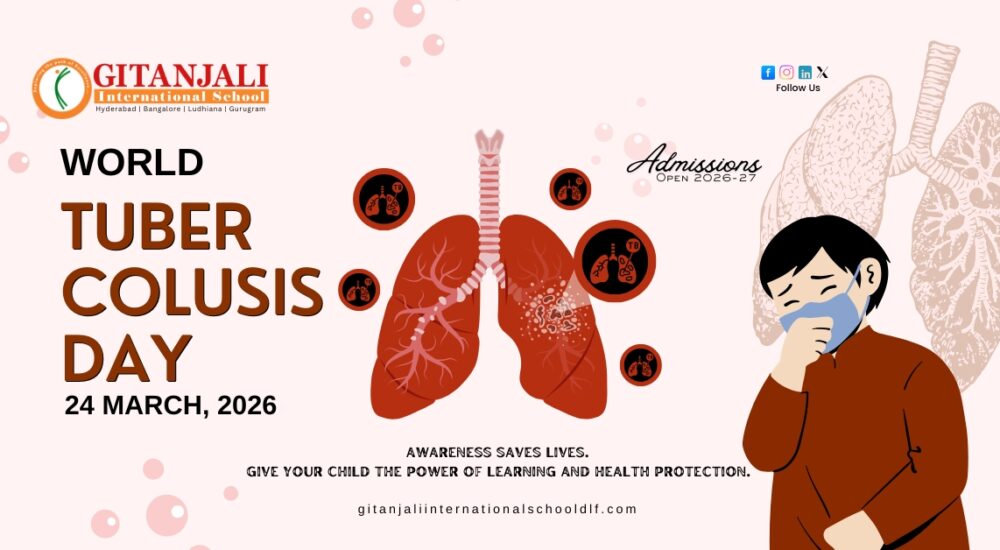
Schools use World Tuberculosis Day to teach students about health awareness while students develop their understanding of community responsibility. Young learners find it hard to understand tuberculosis (TB) because of its complexity but they can comprehend it through story-based learning which includes activities and real-world examples.
The DLF Branch of Gitanjali International School in Gurgaon, known among the best kindergarten schools in Phase 4 Gurgaon, celebrates awareness days to help students connect their classroom learning with actual world experiences.
Why World Tuberculosis Day Matters to Students
The World Tuberculosis Day occurs on March 24 to educate people about tuberculosis, which primarily impacts the human respiratory system. The field of medicine has developed better treatment options, yet public knowledge about the disease still serves as the most effective method for stopping its spread.
Students will acquire fundamental knowledge about germ transmission and hygiene importance and protective measures that keep their families and communities safe. Teachers use stories and visual materials that match the students’ development stage to help them learn about the subject matter without developing anxiety.
Students develop health responsibility when they understand that common practices like covering their mouth during coughing and washing hands create barriers against disease transmission.
Connecting Classroom Lessons to Real-Life Situations
The process of education achieves its best results when students understand that their classroom studies extend beyond the boundaries of their textbooks. The scientific and environmental studies curricula already include the educational content of germs, cleanliness, and nutrition. Students observe the connection between their studies and actual health problems through World Tuberculosis Day.
Science classes teach students about bacteria which helps them comprehend the process of infection transmission. The students learn about healthy food habits which demonstrates to them that proper nutrition helps their bodies fight off illnesses. The practical connections between the two fields of study make educational experiences valuable since they provide students with actual work skills.
Learning Beyond Books: Awareness Through Activities
One of the most rewarding aspects of awareness days is having many fun activities for everyone to participate in. Students are able to engage in active learning of health by exploring different health topics in a fun way.
Here are examples of the type of activities we typically do for awareness days.
- Make posters on hygiene to enter into a competition.
- Take part in storytelling sessions based on being healthy and having good health habits.
- Demonstrate to others how to properly wash their hands.
- Give short presentations in the classroom about how to prevent diseases.
These activities not only improve understanding but also strengthen creativity, teamwork, and communication skills.
Little Leaders, Big Impact: Student Leadership in Action
An eye-catching highlight of school awareness programs is student leadership. Older students often take the lead in guiding younger learners through demonstrations or presentations about hygiene and healthy living.
This leadership experience builds confidence and responsibility. When students explain concepts to their peers, they reinforce their own learning while inspiring others.
Such opportunities help students develop public-speaking skills, teamwork abilities, and empathy qualities that prepare them to become responsible leaders in the future.
Healthy Habits Start Young: Small Steps, Big Results
The day celebrating world tuberculosis encourages students to remember, the habits developed today will help prevent any diseases later down the line. Schools do a great job of ensuring our students develop healthy habits every single day in their daily school routine, therefore creating a solid foundation of health for our students.
To create this foundation, students should:
- Maintain proper hand hygiene by washing hands regularly with soap
- Maintain proper personal hygiene
- Consume well balanced nutritious meals
- Maintain cleanliness and limitations of germs within the classroom and/or environment where they are located.
If students implement these habits regularly, they create lifelong practices related to safety and well-being.
From Awareness to Empathy: Building Compassionate Citizens
Health awareness requires people to learn facts yet requires them to develop empathetic understanding. Students discover how diseases impact actual individuals together with their family members and their complete community.
Through discussions and storytelling, they understand the importance of supporting others and showing kindness to those facing health challenges. This emotional learning process establishes the fundamental attitudes which people need to develop for communal existence.
The educational values at Gitanjali International School DLF Branch Gurgaon use their core principles to teach students who attend their institution because they want to become responsible and compassionate people.
Long-Term Impact: Preparing Students for a Healthier Future
World Tuberculosis Day awareness programs create permanent effects that remain with young individuals. Students who learn about health and prevention at an early age grow into individuals who make informed choices and prioritize well-being.
The lessons develop student confidence and discipline and responsibility which become essential skills for their upcoming obstacles. Schools use health awareness programs as part of their daily instruction to prepare students for both academic achievement and life success.
Awareness Today Responsibility Tomorrow
World Tuberculosis Day demonstrates how education programs help people develop better health habits. Students who study actual health problems through interactive activities and narrative methods gain knowledge which stays with them throughout their lives.
Schools help students build informed citizenship skills through knowledge development and empathy training which leads to responsible behavior. Young people develop understanding about their capacity to make important changes through their work in real-life projects.
FAQ’s:
- What is World Tuberculosis Day and why is it important for students?
World Tuberculosis Day, observed on March 24, raises awareness about tuberculosis and teaches students the importance of hygiene, prevention, and healthy living habits. - How do schools teach students about World Tuberculosis Day?
Schools conduct activities such as poster-making, storytelling, hygiene demonstrations, and awareness sessions to help students understand disease prevention in an engaging way. - What healthy habits can students learn on World Tuberculosis Day?
Students learn important habits like regular handwashing, covering their mouth while coughing, eating nutritious food, and maintaining cleanliness to prevent infections.
aviatorgamedownload
September 19, 2026I finally found a smooth way to grab the aviator game on my phone without any hassle. The interface is super clean and my bets load instantly every single time. Just love how easy it is to jump into a round right here. Thanks for making my daily gaming routine so much better. Check out aviatorgamedownload if you want a stress free betting experience that actually delivers.
br289winbet
September 22, 2026This site is a hidden gem. The odds are fair and the overall vibe is just right for a casual player like me. Check out br289winbet.